

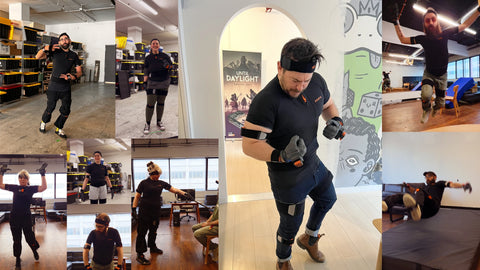
Welcome back, everyone. I’m Gary, co-founder of FLYOS and Game Director of Eternal Whispers.
For this second dev diary, I’d like to discuss what quite literally brings the game to life: animation.
How do we create believable human movement within a highly stylized universe? How do we tell a cinematic story when the game is primarily viewed from a top-down perspective? How do we give weight to a vampire, a creature, a die, or even the city itself when working with a relatively small team and limited resources?
Animation in Eternal Whispers is about motion capture, locomotion, creatures, camera movement, visual effects, weather, and even certain UI elements. All these forms of movement must belong to the same world and serve the same purpose: making Montreal feel alive, tangible, and unsettling.
As with our first dev diary, we also want to show you the game as it is actually being developed. Some systems and scenes are already well advanced. Others are still going through research, experimentation, and iteration.
Finding the mortal within the Vampire
Most of the characters you will encounter in Eternal Whispers are humanoid creatures: vampires, ghouls, and, of course, many mortals who are sometimes completely unaware of the world surrounding them.
Although our art direction is stylized, we wanted their movements to remain natural and recognizable. A character may have slightly reinterpreted proportions, move through a hand-painted environment, and be illuminated in a highly dramatic way, but their body must still possess a weight, posture, and intention that players can relate to.
This search for natural movement is particularly important in a narrative game. A hesitation, a step backward, a subtle change in posture or an emotion can sometimes communicate as much as a line of dialogue. We therefore decided very early that a significant portion of the game’s animations would be created using motion capture.
Among the different solutions available, we chose to invest in an Xsens suit. For a small independent studio, it cost us an arm and probably a kidney. But considering the number of animations we needed to produce, the investment made sense.
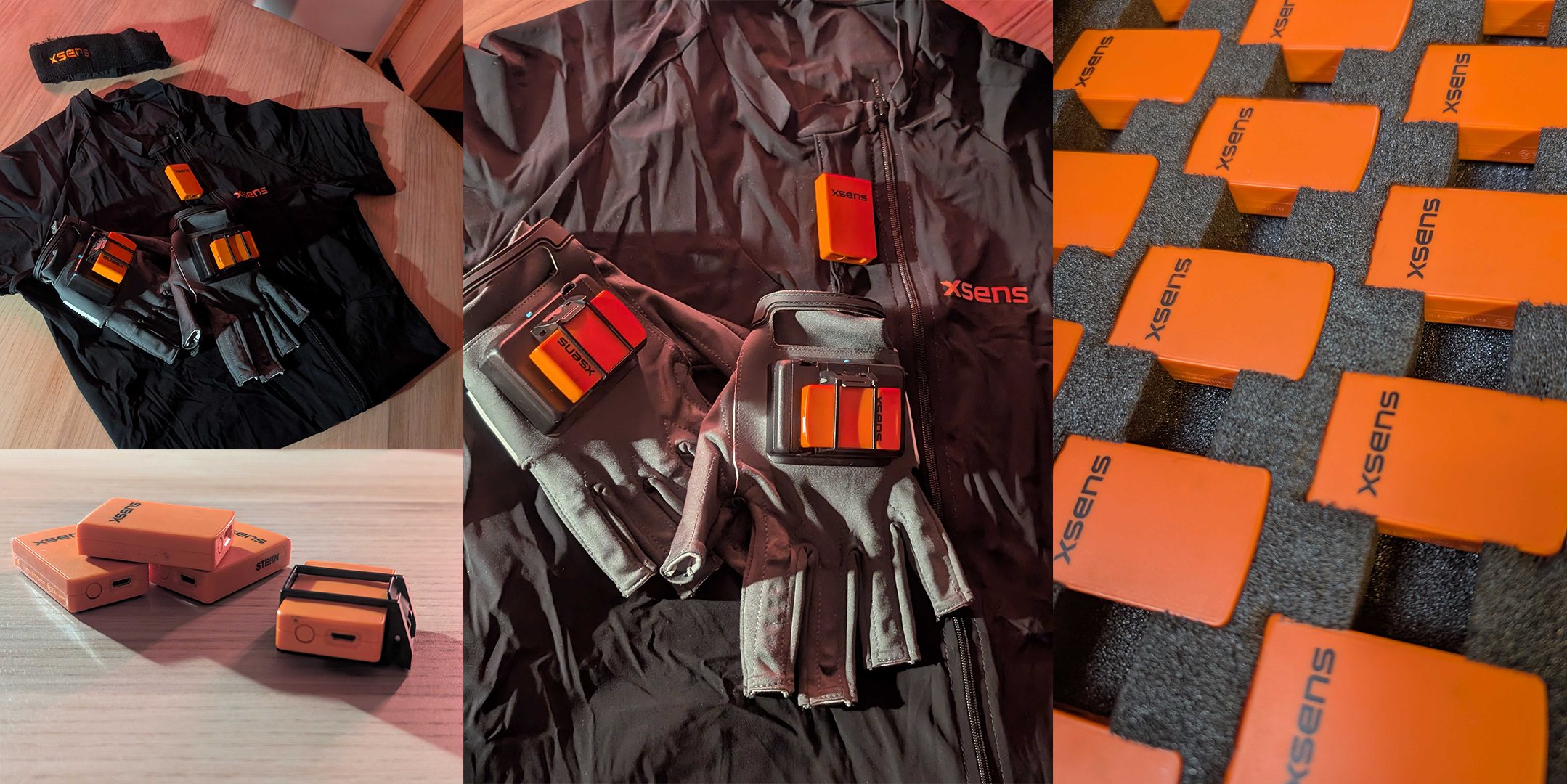
Most importantly, it allows us to capture performances regularly and at our own pace, without turning every new animation into a massive external shoot.
All performances captured in-house
We have now been recording motion-capture sessions for more than two years.
Many members of the team have taken part. Our producer has portrayed certain characters. Simon, our narrative designer, has performed several roles. Our 3D artists have also stepped into the suit. Hannah, a friend who came from the United States, helped us bring several characters to life. I have also performed various scenes and reactions myself.
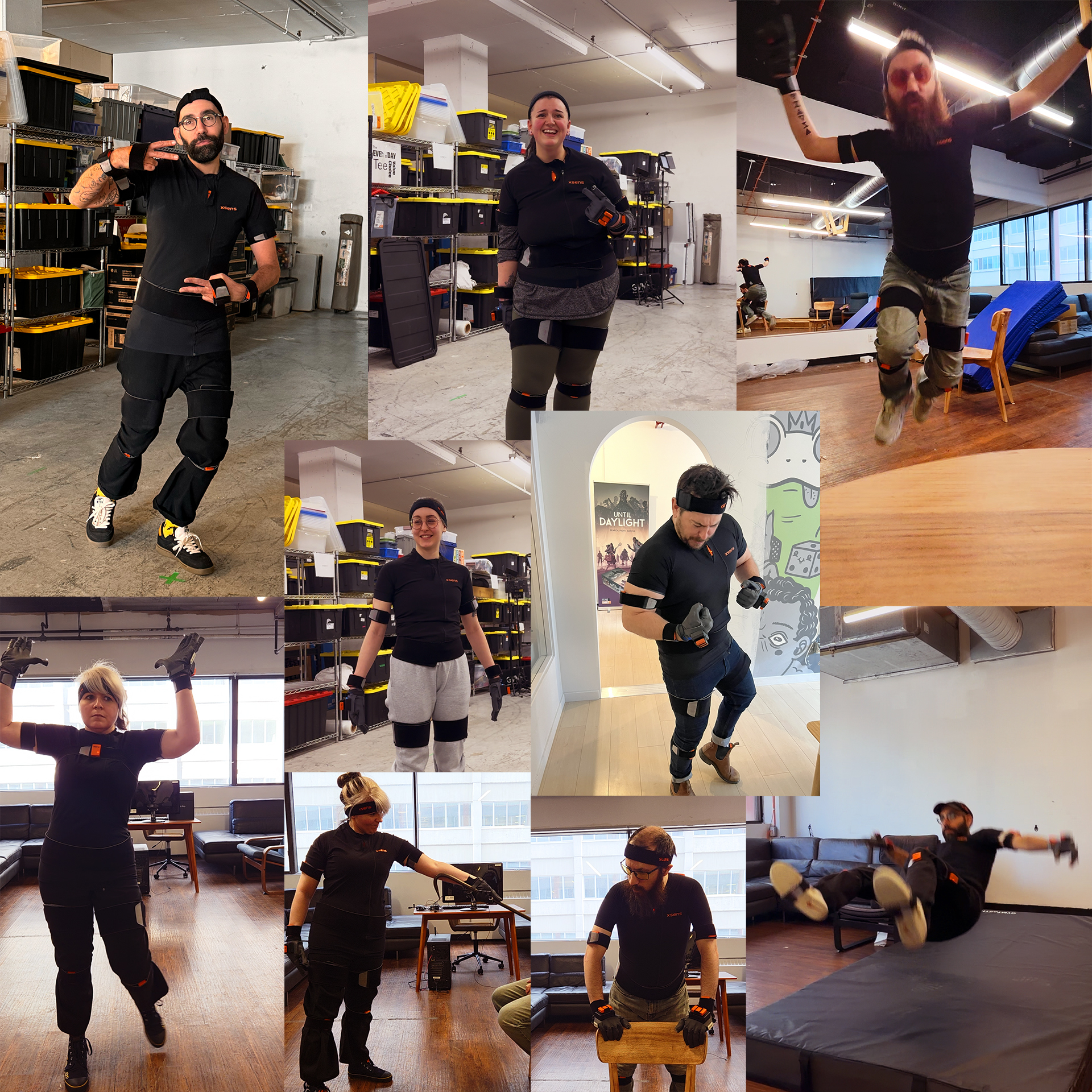
There is something deeply human about working this way. Behind a character you may encounter for only a few minutes, there is often someone from the team who experimented with their walk, searched for the right posture, or performed their fear.
Motion capture, however, is never the final animation. It gives us a performance, an energy, and a starting point. The movements must then be cleaned up, adapted to the characters' proportions, gameplay camera view, and corrected for proper contact. Sometimes, certain actions must be completely reinterpreted.
The transition between the person performing and the character who ultimately appears in the game is one of the most interesting parts of our process.
A small team behind every movement
Every animation in Eternal Whispers is created in-house by just two people: one full-time animator and a talented 3D generalist. Together, they handle everything from motion capture sessions and rigging to locomotion, character-specific keyframe animation, Unreal Engine integration, and many of the game’s sequences.
With a limited budget and no outsourced animation production, we’ve built a workflow around tools that work well for our team: Xsens for capturing performances, Unreal Engine for much of the integration, adjustment, and cleanup, and Blender supporting specific rigging and skinning tasks.
Keeping that process focused lets us move quickly from a captured performance to testing it inside the game, where the real test begins: a movement that looks convincing on its own can feel too slow or difficult to read from our top-down camera. It also means choosing carefully where to reuse animations, when to capture a distinctive performance, and what is best animated by hand.
Working at this scale is demanding, but it creates a close connection between performance and implementation. The people capturing a movement are also responsible for making it work on screen. Every animation has to serve the gameplay, convey the right emotion, and earn its place in our production schedule.
Exploring the city
The main protagonist’s locomotion has been one of our longest-running areas of exploration.
At first, we attempted to build an entirely custom system. But locomotion relies on hundreds of small balances: the character’s speed, stride length, changes in direction, acceleration, foot placement, and the transitions between different idles.
When these elements do not align perfectly, the character appears to slide across the ground.
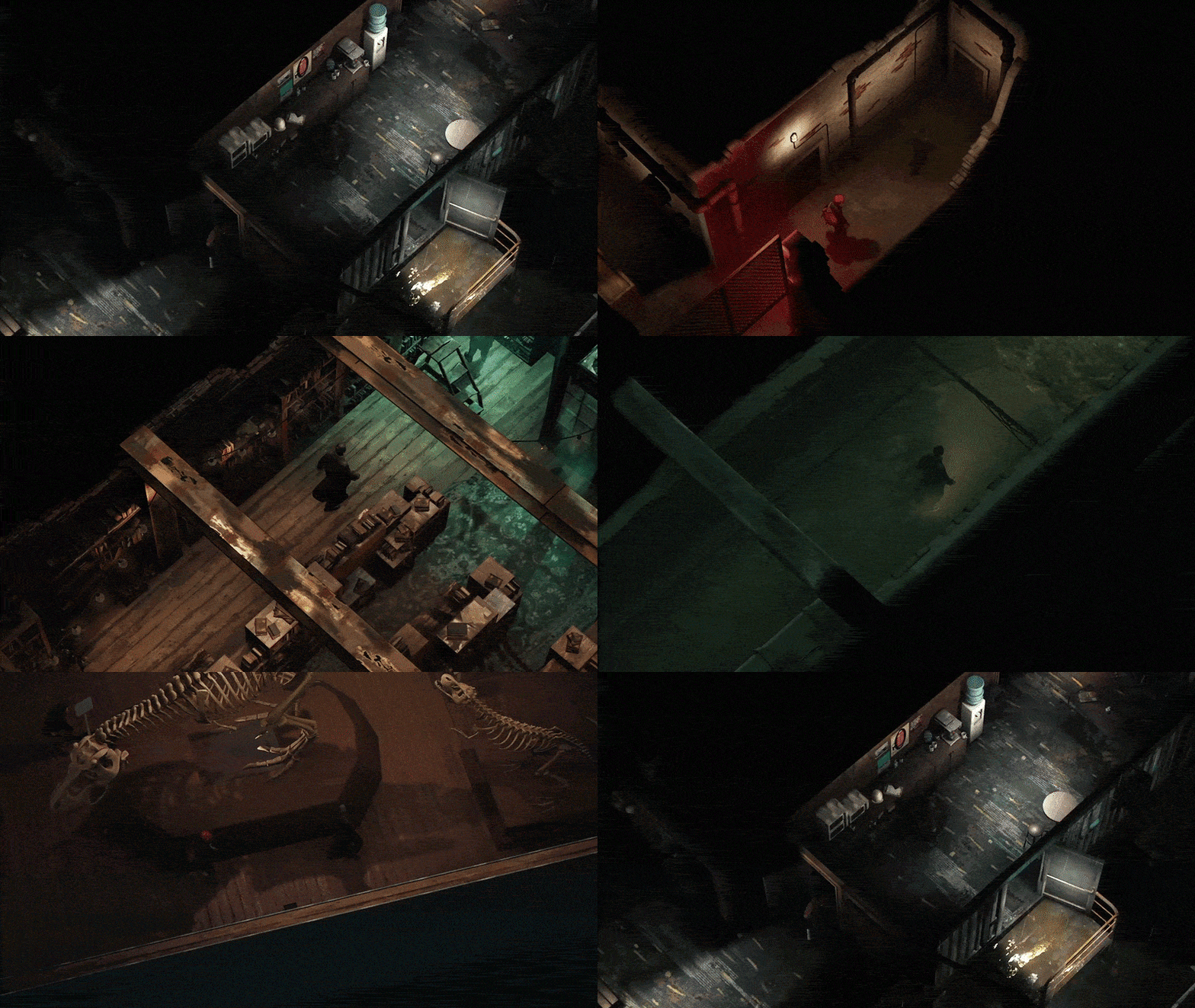
GIF is optimised for Steam News
We are currently exploring a hybrid approach that combines some of Unreal’s native systems with animations and adjustments created specifically for Eternal Whispers. Our goal is to retain something stable and pleasant to control while giving the protagonist a presence of their own. Ultimately, much of the game depends on exploration, so seeing Gabe wandering around. It should be a pleasant experience.
The same work continues for non-player characters. Their movements must make the environments feel believable without becoming a constant source of visual noise.
We are, of course, aware that the characters in an indie game like ours will not possess the sheer quantity of movement or the level of polish found in a project like The Last of Us or BG3. That is not where our ambition lies. Instead, we are trying to determine where a specific animation can genuinely change the way a scene is perceived and where our efforts will have the greatest impact.
Thinking and feeding like a Vampire
Feeding is probably the clearest example of how unique some animations must be. It should not feel like a simple gameplay command accompanied by a functional movement. It is an intimate, violent, and profoundly vampiric act. It must feel visceral while remaining consistent with the tone of the scene and the character performing it, and adapted to some of your choices.
We want these moments to have an identity unique to Eternal Whispers. You will not see exactly the same feeding animations in another game because they were designed around our staging, our characters, and our interpretation of vampirism.
Naturally, we are creating them with our own resources, technical abilities, and a certain degree of humility. But these specific moments are precisely where we want to prioritize custom animation.
This approach extends to several important sequences. Some are performed through motion capture. Others are a mix that includes hand-animated elements. Many combine both methods before being reworked to achieve the rhythm, posture, or silhouette required by the scene.
Using the camera to convey emotion
The camera is also a form of animation. The primary viewpoint in Eternal Whispers is top-down. This choice evokes classic CRPGs and that distinctive sensation of observing a world, understanding its rules, and moving characters through it almost like pieces on a chessboard.
In our case, this position also carries a symbolic dimension. Players are not simply placed at the level of the mortals inhabiting the city. They observe it from above. They analyze its spaces, behaviours, and possibilities. We want to create the impression of a kind of “blood-god” suspended above Montreal.
However, this perspective also creates limitations. We cannot always use the same framing as a third-person game or one built around close-ups. At specific moments, we therefore try to move the camera in ways that support the emotion of a scene. We use spline-based movement as well as several tools connected to the player camera.
Some scenes use a vertigo effect, in which camera movement and changes in zoom simultaneously create a sensation of imbalance. Others use a Dutch angle (an intentionally tilted frame) to express discomfort, the protagonist’s state of mind, or sometimes the unease we want the player to feel.
These movements must remain fluid. An overly conspicuous camera can quickly become tiring or even cause physical discomfort unrelated to the emotion we intended. Our goal is for the camera to guide the eye naturally and strengthen a scene without constantly drawing attention to its own presence.
Humans, animals, and creatures
Not every inhabitant of Montreal walks on two legs. In the Haven, you will encounter Jade’s cat, Sugar. This cat needs its own quadrupedal locomotion, postures, and behaviors. The same challenge applies to other animals, including the rats inhabiting some of the city’s darker corners.
At a very different scale, the trailer has already revealed a much larger creature: a Garou in Crinos form, encountered in the sewers. This creature cannot just inherit human animations and be scaled up. Its silhouette, weight, center of gravity, and spatial occupancy demand a dedicated rig and custom animation. Some of its custom animation involved Simon mimicking the beast as it hit Sam.
The way a creature moves is often the first information players receive about it. Before any movement, its posture should communicate its strength, unpredictability, or the danger it represents.
These characters require a great deal of work for a small team, but they also allow us to disrupt the game’s visual rhythm and remind players that the World of Darkness is not limited to creatures that can still pass as human.
Revealing the city through the Fog of War
One of the systems that most strongly influences our staging is the Fog of War. It conceals parts of an environment that the protagonist cannot yet perceive, encouraging players to explore and gradually reveal their surroundings.
Characters hidden in unexplored areas remain unseen until the protagonist’s perception reveals them. While this approach isn't as sleek as we'd hoped, it proved much more beneficial. Consequently, we need to thoughtfully determine character placement to ensure they enter the player’s view appropriately.
This system operates primarily on a horizontal plane, somewhat like the Fog of War found in certain strategy games or in League of Legends. It led us to favour slightly wider maps rather than exploration built around multiple overlapping levels.
That does not mean we have abandoned verticality. Instead, we use it through environmental composition, architectural silhouettes, and staging. Spaces can feel vast, imposing, or vertiginous without constantly requiring players to navigate between multiple floors.
A city that never remains entirely still
Bringing the game to life does not mean filling every corner with constant movement. It often means animating things subtly enough that players feel their presence without necessarily noticing them consciously. Smoke, fog, and other visual effects contribute to this feeling.
The story of Eternal Whispers unfolds over a period long enough for Montreal to change with the seasons. Rain, snow, and moving foliage must all contribute to the passage of time.
We want to create the impression that Montreal continues to exist when the player is not looking. Once again, this ambition remains proportional to the project’s size and budget. We are not trying to simulate every detail of urban life, but to select the movements that make a scene believable and reinforce its atmosphere.
The world must breathe, even when its inhabitants have been dead for a very long time.
Giving weight to its user interface
In our first dev diary, we discussed our intention to create an elegant interface built around black, copper, and gold. But an interface is not defined by colors and shapes alone. The way it responds, appears, and moves also contributes to the game’s identity.
In particular, we want to preserve some of the feeling of tabletop role-playing. For certain skill checks, we have therefore chosen to represent physical dice. They need to feel heavy, roll with enough energy, and produce a result that feels genuinely thrown rather than simply generated by a menu.
It is a small detail, but one that directly connects the video game to our old Vampire: The Masquerade sessions around the table, with our friends, when we were 17.
Menus, transitions, and visual feedback must follow the same philosophy. They need to be fluid enough not to slow down the reading experience while retaining a physical presence that belongs within the rest of the universe.
Telling the story beyond the game
The animation of Eternal Whispers also exists within our trailers. The opening CGI portion of the announcement trailer was created entirely in-house. It does not use the game engine. We developed our own approach, including textures that sometimes appear to spill beyond the forms to give the images a more painterly quality.
We also used our Xsens equipment to record some of the performances. I portrayed the character and performed several of his reactions. Valentin worked on the animation, while Baptiste handled elements including the textures, lighting, and certain camera effects, such as the vertigo effect.
I wanted these CGI scenes to be more than just marketing material. They allow us to tell fragments of the story that exist around the game, suggest events, and provide clues without necessarily explaining everything.
We are currently preparing another trailer with a greater focus on gameplay. It will also contain some CGI elements created in-house. They will probably remain brief and subtle (we obviously do not have the production capabilities of a massive studio specializing in CGI), but they provide us with another way to open a window onto the story, and we have the chance to do it our way.
So pay close attention to what these images might reveal ;)
Conclusion — A world still in motion
Animation in Eternal Whispers exists at the intersection of several different intentions.
It must make stylized characters feel believable, convey the violence and intimacy of vampirism, guide the player’s eye from a top-down perspective, and bring to life a city that changes over time. It must also function within the very real constraints of a small indie team.
Motion capture gives us a foundation of natural human performances, which we then refine and adapt to suit our characters and creatures to the design of each scene. The camera, visual effects, weather, and interface extend that movement across the rest of the game.
There is still a great deal of work ahead of us. Locomotion continues to evolve. Some creatures still require their own rigs and animation systems. Several scenes will need to be cleaned, adjusted, or performed again as the game gradually reaches its final form.
But that is also what we want to share through these dev diaries. Not only the result, but the way a game like Eternal Whispers is built, performance by performance and movement by movement.
In a world inhabited by the dead and by creatures hiding in the night, our work ultimately consists of making everything feel alive.
See you next time!

